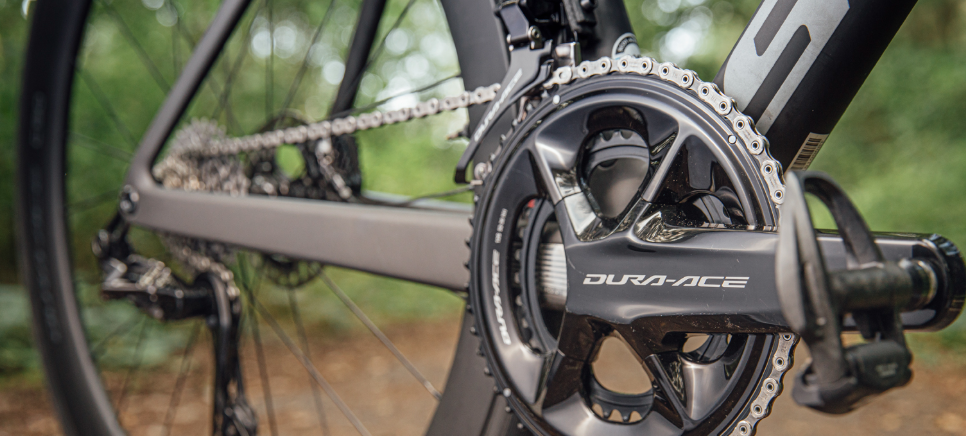
If you’ve been riding road bikes long enough, you’ve probably faced the classic dilemma: Shimano or Campagnolo?
I remember standing in a workshop years ago, staring at two high-end builds side by side. One equipped with Shimano Dura-Ace Di2. The other running Campagnolo Super Record. Both beautiful. Both elite. But they felt completely different in personality.
Choosing between them isn’t just about shifting performance. It’s about riding identity.
Two Brands, Two Philosophies
Shimano, founded in 1921 in Japan, has become the dominant force in the global drivetrain market. Various industry estimates suggest Shimano controls well over 70 percent of the bicycle component market worldwide. That level of dominance speaks volumes about reliability, scalability, and technological development.
Campagnolo, founded in 1933 in Italy by Tullio Campagnolo, carries a different kind of legacy. Deeply rooted in European racing heritage, the brand has long been associated with craftsmanship, prestige, and mechanical artistry. Many classic Giro d’Italia and Tour de France moments were powered by Campagnolo components.
Right away, you can sense the contrast. Shimano often represents precision engineering and technological refinement. Campagnolo represents tradition, character, and tactile engagement.
Shifting Feel and On-Road Experience
The first time I rode Shimano Di2 on a serious climb, I was struck by how effortless everything felt. Press the button, the chain moves instantly. No hesitation. No ambiguity. The shifts are crisp and nearly silent.
Electronic shifting has been refined to a point where consistency is almost boring, in a good way. Rain, sweat, long descents, steep climbs, the performance remains stable. It just works.
Campagnolo, especially in its mechanical versions, delivers a different experience. The shifting has a defined mechanical click. You feel the engagement. There is feedback through the lever that reminds you a physical mechanism is moving into place.
Some riders prefer that tactile confirmation. It feels deliberate and connected. Even their electronic EPS system maintains a slightly distinct character compared to Shimano.
In short, Shimano feels seamless and intuitive. Campagnolo feels expressive and mechanical.
Ergonomics and Lever Design
Ergonomics matter more than many people admit.
Shimano’s hood shape is generally considered universal and comfortable for long endurance rides. The dual-control lever system is simple and easy to adapt to, especially for new riders transitioning into road cycling.
Campagnolo uses a different lever layout, including a thumb shifter in many models. It takes a little time to adjust if you’re used to Shimano. But once familiar, many riders appreciate the separation of functions and the positive click response.
This often comes down to hand size, riding posture, and personal preference. There is no universal winner, only what feels natural after several hours in the saddle.
Weight and Technology
At the high-end level, weight differences between Shimano Dura-Ace and Campagnolo Super Record are minimal. Both are engineered for competitive performance.
Shimano has heavily invested in integration and electronic systems. Battery life in Di2 systems is impressive, and firmware updates allow for customization and fine-tuning. Compatibility across models is also relatively broad.
Campagnolo continues to emphasize refinement and aesthetic appeal. Their carbon cranksets and polished finishes often stand out visually. For many cyclists, the visual presence of Campagnolo adds emotional value to a build.
Interestingly, Campagnolo pioneered several drivetrain innovations decades ago, including quick-release mechanisms and early gear-shifting concepts. Even if their market share is smaller today, their influence on cycling technology is undeniable.
Maintenance and Practical Considerations
Here’s where realism comes into play.
Shimano components are widely available almost everywhere in the world. Spare parts, cables, chains, cassettes, and small replacement items are easier to find. Most bike shops are very familiar with Shimano systems.
Campagnolo, being more niche in many regions, may require ordering specific parts. In major cycling cities, this is rarely an issue. In smaller markets, availability can be limited.
From personal experience, Shimano often feels like the practical, low-stress choice. Campagnolo sometimes requires more intentional ownership. For some riders, that’s part of the charm.
Matching the Groupset to Your Riding Style
So which one fits your riding style?
Choose Shimano if you value consistency, global support, and cutting-edge electronic precision. It’s ideal for endurance riders, racers who prioritize performance efficiency, and cyclists who want dependable functionality without complication.
Choose Campagnolo if you appreciate heritage, mechanical feedback, and distinctive design. It suits riders who see their bike not only as equipment but as a crafted machine with personality.
Neither choice is wrong. In fact, performance differences at comparable tiers are often marginal. The distinction is more about experience than raw speed.
I’ve ridden long mountainous routes with Shimano where the shifting felt invisible, allowing me to focus entirely on cadence and breathing. I’ve also ridden rolling countryside roads with Campagnolo where each gear change felt intentional and satisfying.
Both delivered performance. The emotional tone was simply different.
Final Thoughts
At the end of the day, the best groupset is the one that keeps you excited to ride.
Logos and brand loyalty matter less than the feeling you get when accelerating out of a corner or climbing toward a summit. If your drivetrain inspires confidence and enjoyment, it’s doing its job.
If I were building two bikes today, I would probably choose Shimano for a dedicated race and training machine. For a weekend performance build with classic flair, Campagnolo would be incredibly tempting.
Because cycling is not only about speed. It is also about connection, character, and the experience between you and the road.
And that’s where the real difference lies.